
Invisalign vs Braces: Which Is Better for Santa Ana Patients?
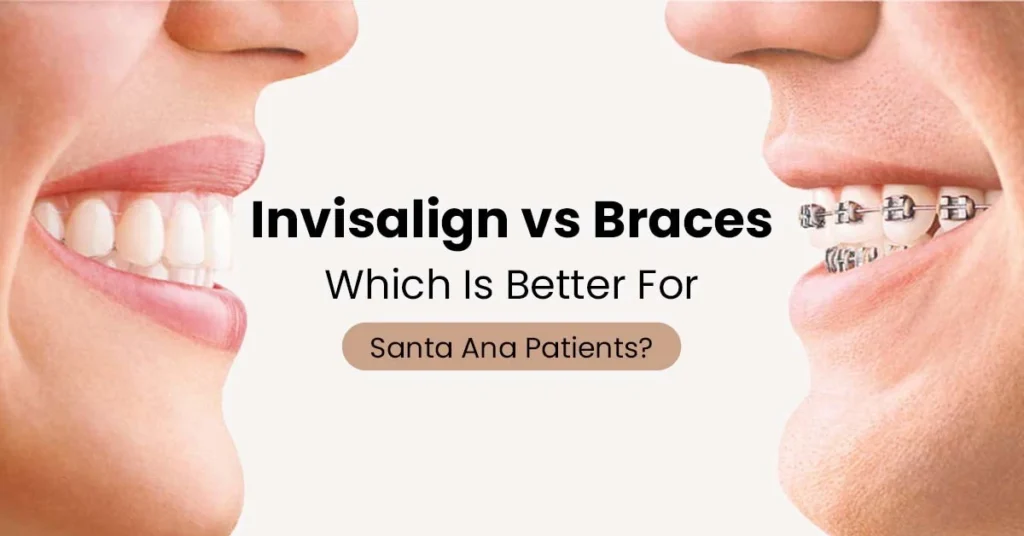
A healthy smile is the symbol of confidence that motivates Santa Ana residents to seek timely orthodontic treatments and maintain their oral well-being. Therefore, dentists offer tailored services with methods that fit each individual’s unique needs and lifestyle. Two of the most popular orthodontic methods available in Santa Ana today are Invisalign and traditional braces.
When understanding the comparison of Invisalign vs braces, know that both correct misaligned teeth, bite issues, and overall dental irregularities. However, both treatment options have their own benefits and drawbacks. Both effectively straighten teeth, but which one would suit you better in the long run depends on individual needs, preferences, and the complexity of dental issues.
What Is The Difference Between Invisalign and Braces?
An Orthodontist in Santa Ana will always put forward the stark differences between the treatment options. The following chart will help you make informed decision more effectively.
Invisalign |
Braces |
|
|
Aesthetics |
Nearly invisible |
Noticeable due to metal brackets |
|
Removable/ Fixed |
Can be taken off for food and flossing |
Permanently attached |
|
Comfort |
Reduced irritation to the mouth and gums |
Brackets and wires irritate the gums |
|
Hygiene |
Easier to clean |
Requires careful brushing |
|
Food and Drink |
No food restriction |
Dietary changes to avoid hard and sticky food items |
|
Discipline |
Requires strict adherence for 20-22 hours per day |
No strict wear time |
|
Complexity |
Best for moderate teeth alignment cases |
Better for complex teeth alignment cases |
|
Maintenance |
Fewer dental visits |
Frequent follow-ups to adjust wires |
Effectiveness and Suitability of Invisalign's and Braces for Santa Ana Patients
When comparing both Invisalign vs braces, know that both are effective in their own way. However, their durability depends largely on the severity and type of orthodontic problems.
Invisalign
Before getting your treatment done, it is better to research the Invisalign pros and cons. It works well for mild to moderate dental issues, such as mild crowding, gaps, overbites, underbites, and open bites. However, it requires patient discipline as aligners must be worn 20 to 22 hours per day to achieve the desired results.
Braces
The difference between Invisalign vs braces is that braces excel in treating complex dental problems. These often include severe misalignment, jaw discrepancies, delayed tooth eruption, and cases requiring jaw movement or correction of bite issues. Braces are fixed and they work continuously without requiring patient compliance in wearing them, which makes them favorable.
For Santa Ana patients, those with simple to moderate cases and who value aesthetics and removability may prefer Invisalign. However, patients with complex dental cases or concerns about maintaining consistent wear tend to benefit more from braces.
Invisalign vs Braces Treatment Duration and Maintenance
Treatment time varies for both Invisalign and braces, based on complexity, but generally:
- Invisalign treatment ranges from 12 to 18 months.
- The braces alternative typically takes 18 to 24 months.
Invisalign patients have fewer dental visits (usually every 6 to 8 weeks), while braces require more frequent adjustments.
In between Invisalign vs braces, when prioritizing the former, know that patients can easily remove trays to eat and clean their teeth. Significantly, it assist in maintaining oral hygiene but demands extra care to avoid losing or damaging the aligners. In contrast, braces require avoiding certain foods that can damage brackets and wires. Regardless of which treatment you choose, retainers and post-treatment care are essential to maintain your new smile. It demands diligent oral care to prevent plaque build-up around braces.
Aesthetic and Lifestyle Considerations of Invisalign and Braces for Santa Ana
The question are clear aligners better than braces raises concern for the patients. It is important to know that clear aligners are nearly invisible. This significant factor allows patients to straighten teeth without altering their appearance. Essentially, these aligners are appealing to adults and professionals in Santa Ana, conscious about their public image.
Furthermore, when choosing between Invisalign vs braces, keep in mind that braces are more visible but have evolved with various options. These include ceramic brackets that are less noticeable than traditional metal ones.
Patients with active lifestyles or sports involvement may find Invisalign more convenient due to removability. However, braces provide a no-risk solution regarding appliance loss or missed wear time.
Cost and Insurance Coverage of Invisalign and Braces
The cost factor of both Invisalign vs braces varies depending on their multiple differences. Invisalign often comes at a slightly higher cost due to the technology and customization involved. However, many dental insurance plans in Santa Ana cover both Invisalign and braces, reducing the out-of-pocket burden.
Patients are encouraged to consult local orthodontists for individualized quotes and financing options.
In The End
When selecting between Invisalign vs braces, both prove beneficial in their own aspects. However, the best choice depends on an individual’s dental complexity, lifestyle, aesthetic preference, and commitment to treatment requirements. Invisalign is ideal for mild-to-moderate cases and offers discreet appeal and ease of cleaning. On the other hand, braces provide a more robust solution for complex alignment issues.
Why Choose Smyl OC Dentistry?
At Smyl OC Dentistry, we ensure that top-quality dental services and guidance are offered to all our patients. Our specialized dentists aim to offer a comprehensive range of dental treatment options. Starting from preventative care to adult treatments we have it all covered up.
Frequently Asked Questions
Q1. How long does treatment typically take for each option?
Invisalign treatment usually takes between 12 and 18 months, and sometimes as quickly as 6 months for minor cases. Braces typically require 18 to 24 months to complete treatment.
Q2. Do both treatments require wearing a retainer afterward?
Yes, wearing a retainer after completing either Invisalign or braces treatment is essential to maintain tooth positions and prevent relapse.
Q3. Are there differences in cost between Invisalign vs braces?
The cost varies depending on the complexity of the case, but generally ranges from $3,000 to $6,000 for both treatments. Invisalign can be a bit more expensive due to the technology involved.